
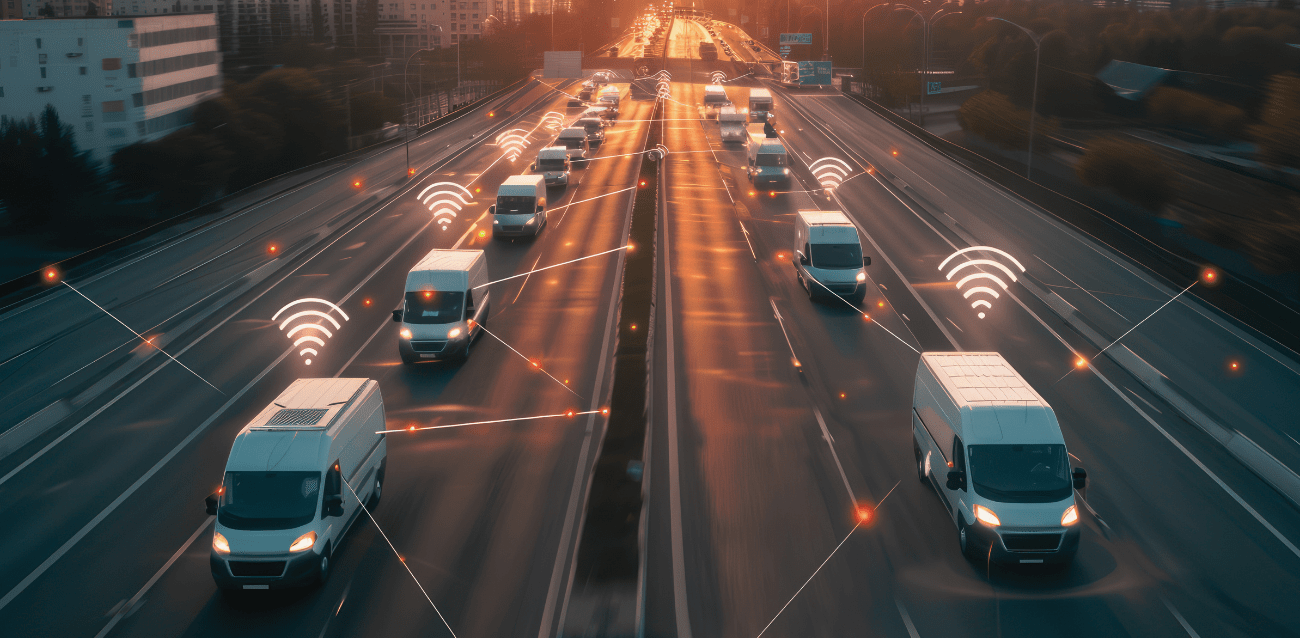
It is clear that transportation isn’t just about moving goods,it’s a complex system of interdependent variables, where every decision impacts costs, timing, and the overall customer experience. We’ve previously covered the foundations of advanced analytics; today, we’ll dive deeper into its business impact and how it’s reshaping logistics strategies and decision-making processes. The question is no longer if Decision AI is relevant, but how to integrate it to accelerate and optimize your logistics chain.
According to the 2025 Annual Report by MHI and Deloitte, AI adoption in supply chains is expected to soar from the current 28% to 82% within the next five years, a massive growth that underscores the value the industry places on AI-powered decision support tools. Likewise, predictive analytics is projected to be adopted by 87% of companies in the same timeframe.
The report also highlights that over half of industry leaders (55%) are increasing their investments in technology and innovation, with 60% planning to allocate over $1 million to these strategic areas. This growing commitment reflects how advanced analytics and AI are becoming essential pillars for transforming logistics and gaining a sustainable competitive edge.

How Decision AI boosts your logistics profitability
Every executive knows that true competitive advantage isn’t about doing more, it’s about doing it better. Advanced analytics enhances planning, reduces operating costs, and maximizes fleet efficiency. Beyond automation, this technology empowers businesses to anticipate scenarios, reallocate resources in real time, and improve customer experience, all while staying focused on profitability.

Tangible reduction in operating costs
Predictive maintenance, for example, can cut fuel costs by 10% to 25% by anticipating system or fleet failures. Combined with AI-powered route optimization and dynamic capacity management, companies can eliminate unnecessary mileage and downtime, unlocking real, sustainable savings.
Increased fleet efficiency and productivity
Advanced analytics allows for demand planning and real-time resource allocation, maximizing schedules and operational cycles. The result? A more efficient fleet and a significant boost in delivery capacity, without expanding your vehicle count.
Better customer experience
Accurate delivery times and proactive communication are critical for building and maintaining trust. Decision AI tools help anticipate and resolve issues quickly, enhancing satisfaction and loyalty among your customers.
Smarter strategic decisions
Pair your expertise with Decision AI models to anticipate risks, identify new opportunities, and define clear strategies, from route expansion to fleet investments, confidently backed by solid data and predictive insights.
Smart logistics powered by Decision AI
Advanced logistics analytics goes far beyond generating reports and dashboards, it’s the key to solving complex challenges that traditionally drained resources and underperformed. By leveraging sophisticated algorithms and machine learning techniques, these solutions transform processes and take operational efficiency to the next level.
Common logistics challenges include:

Dynamic route optimization (VRP)
Finding the optimal route for each vehicle, considering multiple deliveries, time windows, capacity, real-time traffic, and cost factors tailored to your business, is far too complex for manual handling. AI tools solve this in minutes, ensuring efficient routing and cost savings.
Integrated, predictive fleet management
Route optimization is only part of the equation. Fleet management involves assigning vehicles to specific tasks, anticipating maintenance needs to avoid breakdowns, and cutting fuel consumption, all handled dynamically and data-driven.
Real-time adaptability
Traffic changes, cancellations, or urgent orders can throw off operations. Decision AI systems instantly recalculate and propose optimal solutions in real time, ensuring service continuity without sacrificing efficiency.
These solutions turn raw data locations, times, capacities, and costs into actionable intelligence, enabling truly agile logistics operations.
What methods and technologies tackle these logistics challenges?
To address these challenges, a variety of techniques are used:

- Machine learning models:for predictive analysis of maintenance and demand.
- Heuristic and metaheuristic algorithms: like simulated annealing, ant colony optimization, or genetic algorithms, to optimize routing and assignments in real time.
- Prescriptive analytics systems: that recommend specific actions based on data and simulations.
- Real-time data integration: pulling from sensors, GPS, and ERP systems to constantly feed and refine models.

The true source of competitive advantage and arguably, survival in the logistics sector today lies in embracing a data-driven strategic vision. One where every decision is supported by intelligence that drives efficiency, profitability, and a superior customer experience.
In short, smart logistics is your pathway to confidently stepping into the future.
If you’re ready to make faster, smarter decisions, now’s the time to invest in advanced analytics. Contact us today and discover how to integrate Decision AI into your operations.


