
AI in LogisticsLogistics optimisation with AI
Decision AI for a more efficient supply chain
Optimise every link of your supply chain with Decision AI. From route planning and transportation to warehouse optimisation and reverse logistics, our solutions help reduce costs and improve operational efficiency.
value chainExplore how Decision Intelligence solves logistical challenges at every stage of the supply chain.
Network Design
Planning & Management
Inventory Management
Transportation & Mobility
Last Mile & Delivery
Reverse Logistics
Sustainability
Título del nodo
Aquí irá el contenido del nodo cuando lo conectemos.
Supply chain planning and management
- How can you optimise routes to reduce costs and avoid unnecessary trips?
- How can you improve demand forecasting to avoid excess inventory or stockouts?
- How can you evaluate supplier performance to optimise the supply chain?
Storage and inventory management
- How can you organise the warehouse to minimise time and reduce operational costs?
- How can you automate picking and packing to speed up order preparation?
- How can you adjust stock levels based on actual demand and avoid waste?
Transportation and cargo handling
- How can you optimise transport routes to reduce time and fuel costs?
- How can you monitor the fleet in real time to improve efficiency and delivery times?
- How can you anticipate vehicle failures to avoid operational interruptions?
Last mile and customer delivery
- How can you improve last-mile routes to reduce costs and ensure fast deliveries?
- How can you forecast demand for express deliveries to optimise logistics resources?
- How can you increase customer satisfaction with more accurate delivery times?
Returns management and reverse logistics
- How can you optimise the sorting and collection of returns to reduce costs?
- How can you analyse return patterns to minimise delivery errors?
- How can you improve the recovery and reuse of returned products?
Sustainability and carbon footprint reduction
- How can you minimise the carbon footprint by optimising routes and sustainable transport?
- How can you implement eco-friendly fleets without compromising operational efficiency?
- How can you reduce the use of non-sustainable materials in packaging and logistics?


E-book: AI in LogisticsSubmit your download request
This e-book edition is limited. Each request will be reviewed individually, and one copy will be sent per verified profile until all available units have been distributed.
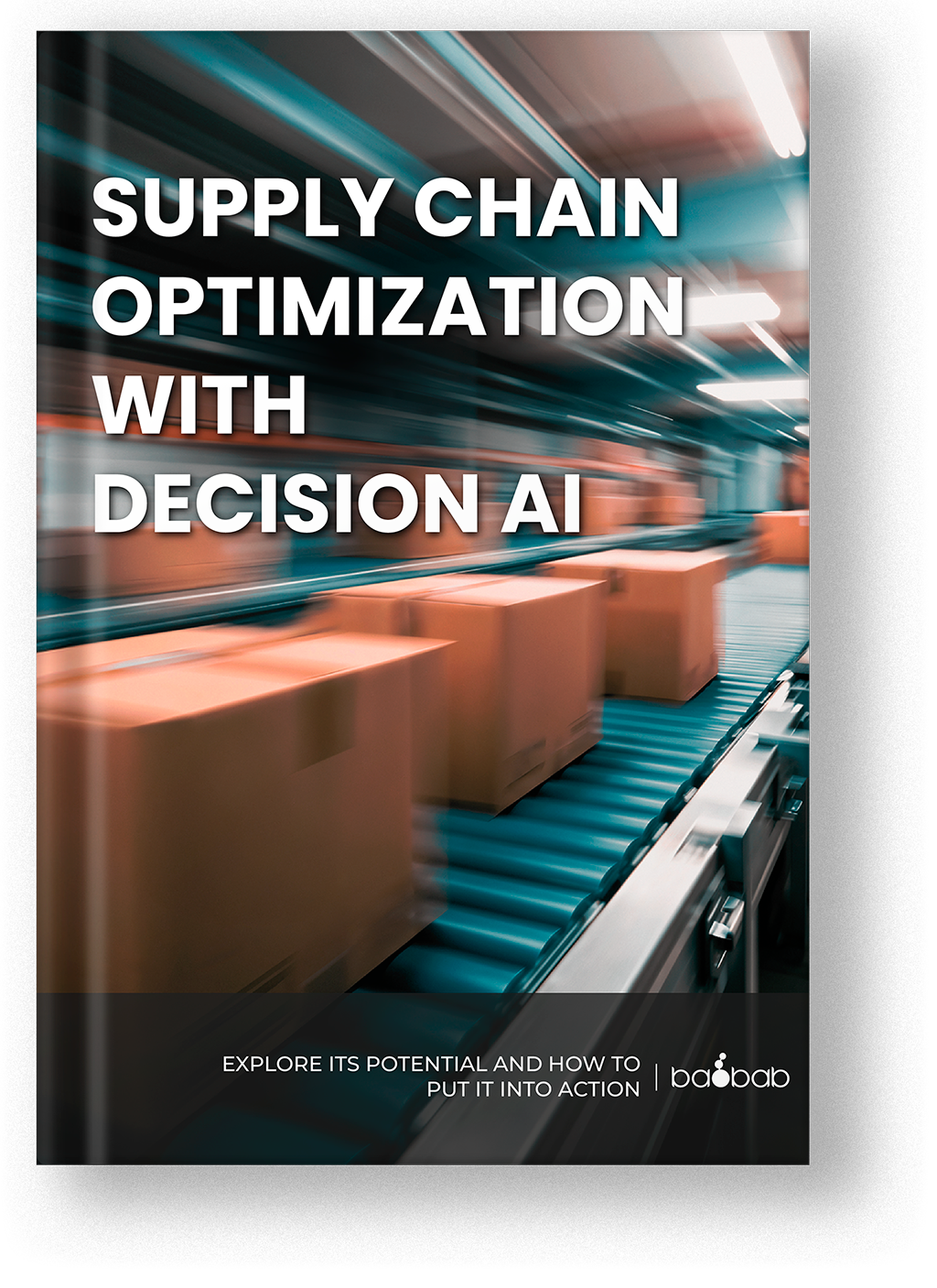
Submit your download request.
This ebook edition is limited. Each request will be reviewed individually, and one copy will be sent per verified profile until the available units run out.
Supply Chain Summit
Access the event’s summary video and dive into the full article with all the insights and conclusions on how Decision AI is revolutionizing logistics.
casos de usoSome use cases
Discover how our solutions have improved efficiency and optimised operations in the energy sector.
Supply chain planning
- Industry: Logistics and Distribution
- Challenge: Optimise supply planning, storage, and distribution to reduce costs and ensure efficient deliveries for a multinational company.
- Approach: Implemented a comprehensive optimisation model covering strategic planning through daily operations, improving resource allocation and significantly cutting costs.
- Results: Increased operational efficiency, resource optimisation, and reduced logistics costs.
- Key Metrics:
12% reduction in operational costs.
10% reduction in idle inventory
Transport route optimisation in logistics.
- Industry: Transport and Distribution.
- Challenge: Optimise route management in courier company, considering fluctuating demand and fleet availability.
- Approach: Implemented a route optimisation system using a two-stage process: demand forecasting for different delivery types, followed by a weekly plan with optimised routes combining own and subcontracted fleets.
- Results: Reduced delivery times, improved resource utilisation, and increased delivery reliability.
- Key Metrics: +17% increase in profit margin, –14% reduction in workload.
Strategic improvement of the warehouse network.
- Industry: Retail and e-commerce.
- Challenge: Optimise the opening and closing of warehouses in a globally distributed company to minimise logistical costs.
- Approach: Application of Decision AI to select strategic warehouse locations, minimising costs and maximising efficiency.
- Results: Achieved a significant reduction in logistical costs, along with improved sensitivity analysis and scenario planning capabilities.
- Key metrics: -22% in logistical costs.
Optimal location of warehouses
- Industry: Supply chain and manufacturing.
- Challenge: Optimise the warehouse network of a manufacturing company to reduce logistical costs and improve long-term operational efficiency.
- Approach: Implementation of Decision Intelligence to analyse multiple warehouse location scenarios using predictive and optimisation models. Strategic locations were identified that minimise transportation costs and maximise distribution efficiency.
- Results: Reduction in distances travelled, optimisation of logistics asset utilisation, and improvement in operational capacity.
- Key metrics:
-15% fewer kilometres travelled.
+18% more optimised logistics assets.
NewsNews and trends in AI applied to logistics



Stay informedDon’t miss anything about Decision Intelligence
Join our community. Follow us on social media and subscribe to our newsletter to stay up to date with the latest in AI applied to business.


