
AI in RetailRetail Optimisation with AI
Decision AI tailored to your business:
Make better decisions and maximise profitability
The retail sector faces the challenge of managing large volumes of data to make strategic decisions, optimise inventories, and accurately anticipate demand. Consumers expect personalised and seamless shopping experiences, which raises the bar for service standards across all channels. In addition, cybersecurity is crucial for protecting data and building customer trust.
We address these challenges with Decision AI, a suite of tools based on advanced mathematics that enhance operational efficiency, drive sustainability, and transform your ability to adapt to today’s market.
value chainExplore how Decision AI enhances strategic decision-making at every stage of your value chain.
Raw Materials
Suppliers
Factories
Warehouses
Store & E-commerce
Customers
Returns
Título del nodo
Aquí irá el contenido del nodo cuando lo conectemos.
Raw Materials
- How to optimize raw material purchasing to reduce costs and avoid shortages?
- How to evaluate suppliers to ensure quality, reliability, and the best prices?
- How to plan demand to avoid unoptimized purchasing and risky dependencies?
Suppliers
- How to select and evaluate suppliers to reduce risks and ensure on-time deliveries?
- How to optimize transportation and reduce logistics costs in supply?
- How to diversify suppliers without compromising supply chain stability?
Factories
- How can you design or upgrade production plants to improve efficiency and reduce waste?
- How can you anticipate machinery failures to avoid production downtime?
- How can you plan production to optimise resource use and align with demand?
Warehouses
- How can you manage inventory to avoid overstocking or stockouts?
- How can you optimise space and layout within the warehouse to speed up order preparation?
- How can you automate picking and stock tracking to reduce time and errors?
Store and E-commerce
- How can you offer the right product to each customer at the right time to maximise conversions?
- How can you define optimal pricing and effective promotions to improve margins and sales?
- How can you automate customer service without compromising the quality of the shopping experience?
Customer
- How can you forecast demand to adjust production, logistics, and commercial strategies?
- How can you personalise the customer experience to improve retention and satisfaction?
- How can you optimise warranty and after-sales management to reduce costs and response times?
Returns
- How can you optimise the collection and sorting of returns to reduce operational costs?
- How can you identify patterns in returns to improve product quality and reduce issues?
- How can you streamline refunds and replacements to improve the customer experience?


E-book: AI in RetailSubmit your download request
This e-book edition is limited. Each request will be reviewed individually, and one copy will be sent per verified profile until all available units have been distributed.
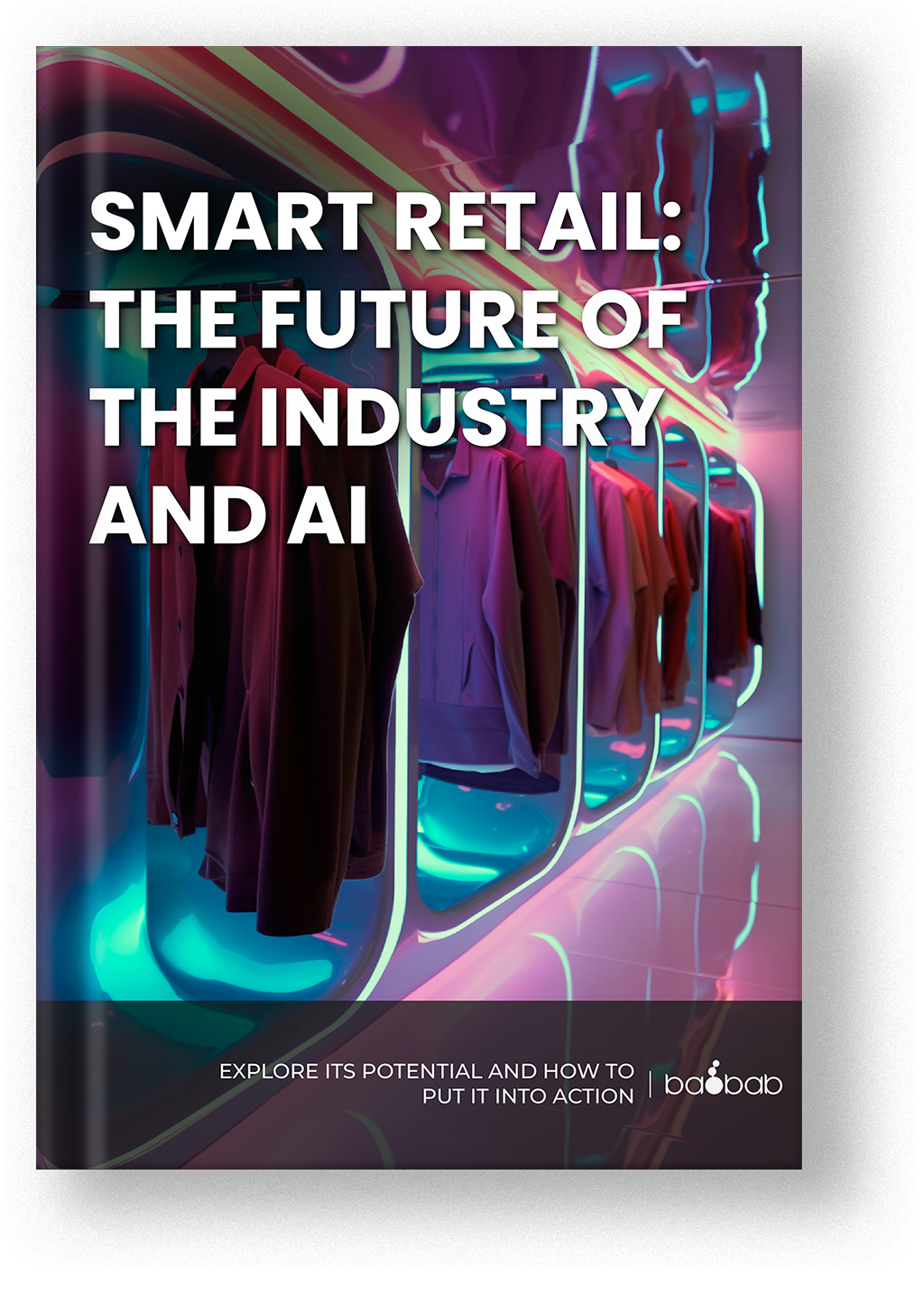
Submit your download request.
This ebook edition is limited. Each request will be reviewed individually, and one copy will be sent per verified profile until the available units run out.
casos de usoSome use cases
Explore how our solutions have optimised operations in the pharmaceutical sector.
Product transfers between stores
- Industry: Retail.
- Challenge: Optimise product transfers between stores of the same brand to maximise sales and margins, taking into account factors such as seasonality, demand, and inventory constraints.
- Approach: Implementation of Decision Intelligence models to forecast sales and optimise product transfers between stores based on demand.
- Results: Streamlined transportation costs for inter-store transfers, improved sales through better inventory availability, and optimised global stock levels, resulting in increased margin per product sold.
- Key Metrics: 14% increase in profit per transfer.
Point of sale location
- Industry: Retail.
- Challenge: Identify strategic locations for new points of sale, taking into account demand, competition, and operating costs.
- Approach: Development and implementation of predictive models, clustering algorithms, and mathematical optimisation to identify the most profitable locations for new stores, using the company’s strategic data.
- Results: Design of an optimal retail network that minimises total costs while accounting for the future growth of the business.
- Key Metrics: 22% reduction in store opening costs.
Staff shift planning
- Industry: Retail.
- Challenge: Improve staff allocation to coordinate tasks and maximise operational efficiency in-store.
- Approach: Use of Decision AI and simulations (with digital twins) to define the optimal staff allocation in stores.
- Results: Reduced staffing costs and increased team efficiency.
- Key Metrics: 9% reduction in staffing costs.
Supply planning
- Industry: Retail.
- Challenge: Adjust inventory levels for each store based on forecasted demand, avoiding stockouts and excess logistics costs.
- Approach: Application of Decision AI tools to forecast demand per SKU and optimise store replenishment planning.
- Results: Improved conversion rates, faster product turnover, increased average margin, and reduced quantity and frequency of shipments.
Key Metrics:
– 15% reduction in transportation costs
– 5% increase in profit margin
– 3% increase in sales
NewsNews and trends in AI applied to retail, operations, logistics, and inventory management
Stay up-to-date with the latest trends and advancements in artificial intelligence applied to retail. Discover how other industry leaders are adopting AI to make better decisions.



Stay informedDon’t miss anything about Decision Intelligence
Join our community. Follow us on social media and subscribe to our newsletter to stay up to date with the latest in AI applied to business.


