

Credit card fraud is one of the biggest threats to the financial system. In the European Economic Area alone, losses reached around €2 billion in the first half of 2023, according to a joint report by the ECB and the EBA.
But the impact goes beyond financial losses: it erodes customer trust and forces institutions to dedicate significant resources to security. In a landscape where cybercriminals are constantly refining their tactics, early fraud detection plays a decisive role in banking.

The Royal Spanish Academy defines an anomaly as a “deviation or discrepancy from a rule or usage.”In other words, detecting anomalies means knowing what’s normal in order to spot what’s unusual.
When it comes to card payments, “normal” can be described through spending habits: typical amounts, transaction locations, frequency of use, or the types of stores visited.
If a customer who usually shops at local supermarkets suddenly makes several purchases abroad, or if multiple cash withdrawals appear within minutes, the anomaly quickly turns into a red flag.
Until recently, banks relied on traditional statistical models to detect these deviations. Methods like the interquartile range (1.5 IQR) or standard deviations worked in simpler contexts. But in today’s globalized financial system—with millions of transactions every second and highly complex spending patterns—these techniques fall short.
That’s where Artificial Intelligence steps in as the banking sector’s strongest ally, thanks to its ability to:


- Learning from massive amounts of data. Supervised Machine Learning algorithms can be trained on transaction histories—both legitimate and fraudulent—uncovering hidden rules that would be almost impossible to model otherwise.
- Spotting anomalies without labeled data. Unsupervised techniques allow systems to learn what “normal” behavior looks like, and when something unusual happens, they trigger real-time alerts.
- Adapting to change.These models evolve with the data and can recognize new types of fraud as criminals attempt to introduce them.
- Going deeper with Deep Learning.Models like Autoencoders help banks learn the normal usage patterns of cards and reconstruct them with high accuracy. When a transaction fits those patterns, it’s considered legitimate; but if it breaks the usual logic—like large withdrawals within minutes or purchases in unexpected locations—the reconstruction fails, and the error becomes a warning signal.This ability to detect anomalies even without prior fraud examples makes Autoencoders a key tool for staying ahead of new threats while improving the customer experience.
The value of AI doesn’t just lie in detecting anomalies—it’s about doing it faster and with fewer false positives. The result: a better customer experience and lower operating costs.
And while fraud detection is one of the most critical use cases, the same anomaly-detection logic can also be applied to other key areas.
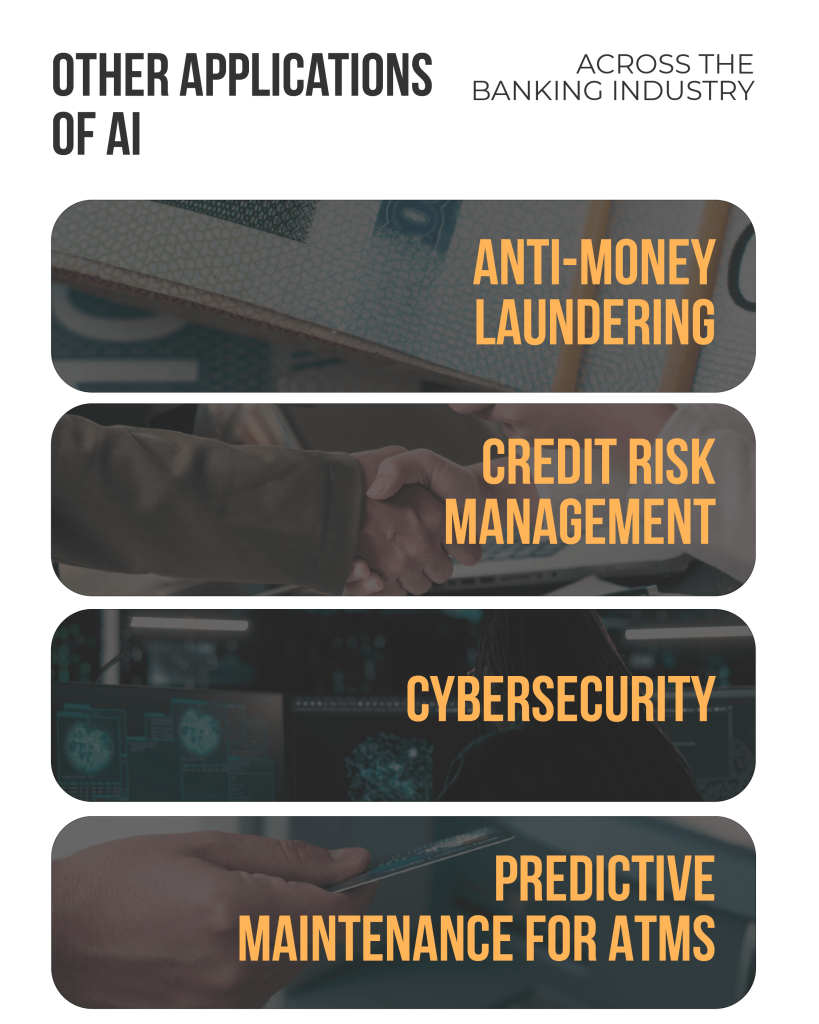
- Anti-Money Laundering (AML).AI can track unusual patterns in transfers and cross-border movements, helping banks stay compliant with increasingly strict regulations.
- Credit Risk Management. Spotting anomalous payment behaviors makes it possible to anticipate defaults or identify higher-risk customers.
- Cybersecurity. AI models continuously monitor banking system traffic to detect unusual access or intrusion attempts.
- Predictive Maintenance for ATMs and payment systems. A technical anomaly—like recurring ATM failures—can be detected before it disrupts service, improving uptime and efficien
Financial fraud evolves with every new technology, constantly challenging the sector’s defenses. But AI gives banks a real competitive edge: the ability to detect the unexpected, protect customer assets, and minimize million-dollar losses.
If you’d like to learn more about how AI solutions can be a strategic step toward a safer, smarter, and more reliable financial ecosystem, you can schedule a free call to explore the details.



