
AI in energyOptimize your energy strategy with decisions based on artificial intelligence
Build the energy future with Decision AI
With Decision AI, energy companies drive sustainability in energy generation, reduce distribution costs, and optimize their pricing strategies. We also facilitate the strategic location of infrastructure to accelerate ROI. Our solutions, based on data and advanced models, ensure efficient and profitable decisions.

Energy Summit Making decisions under uncertainty.
Markets, assets, and operations in the energy sector.
A morning to discuss how companies in the energy sector can turn data, forecasts, and constraints into better business and operational decisions.
November 19th · 9:00–15:00 h
Espacio Downtown · Calle de la Paloma, 15 · Madrid

Sector challengesTwo value chains. One shared challenge: making better decisions.
Case studies and conversations on how to apply models, algorithms, and optimization to make better decisions when markets, demand, or operational constraints change.
Hydrocarbons
Planning, logistics, and operational decisions across the entire value chain.
Planning · Logistics · Inventory · Margin
Electric Power
Real-time decisions on demand, prices, and asset flexibility.
Demand · Prices · Assets · Flexibility
Registration formReserve your spot.
Industry expertsSpeakers

Dr. Macario Polo Usaola
Catedrático de Universidad. Tecnologías y Sistemas de Información
Universidad de Castilla-La Mancha

Dr. Miguel Ortega-Mier
Catedrático de Universidad – Adjunto Al Vicerrector para Digitalización de Procesos Académicos
Universidad Politécnica de Madrid

Dr. Amaia Lusa García
Catedrática de Universidad – Directora de la escuela de ingeniería ETSEIB
Universitat Politècnica de Catalunya

value chainSee how our Decision AI optimizes each phase of the energy value chain
Infrastructure
Generation
Distribution & Regulation
Storage
Commercialization
Consumption & Efficiency
Sustainability & Transition
Título del nodo
Aquí irá el contenido del nodo cuando lo conectemos.
Power Generation
- How to optimize production to reduce costs and maximize efficiency?
- How to anticipate infrastructure failures to avoid unexpected outages?
- How can we improve renewable energy forecasting to stabilize supply?
- How to plan and optimize infrastructure to obtain the most energy at the lowest cost?
Power transmission and distribution
- How to balance network load to avoid losses and optimize costs?
- How to detect infrastructure failures before they occur?
- How to automate energy distribution to adjust to demand in real time?
Energy storage
- How to optimize battery use to reduce waste and improve efficiency?
- How to anticipate future demand to better manage storage levels?
- How to extend the lifespan of storage infrastructures with smart maintenance?
Marketing and regulation of the energy market
- How to define dynamic pricing that maximizes revenue without losing competitiveness?
- How to optimize energy purchasing and sales to avoid financial losses?
- How to predict customer consumption to improve planning and profitability?
Energy consumption and efficiency
- How to reduce energy consumption without affecting productivity or comfort?
- How to implement energy efficiency systems that reduce operating costs?
- How can we leverage automation to manage smart buildings and cities sustainably?
Transition to renewable energy and sustainability
- How to integrate renewable energy without compromising supply stability?
- How to optimize investment in clean energy to accelerate the energy transition?
- How to manage microgrids and balance supply between renewable and conventional sources?


Energy guidesDive deeper into the decision-making challenges in the energy sector.
These guides are limited in edition; each request will be reviewed individually, and one copy will be sent per verified profile until the available number of copies is reached.
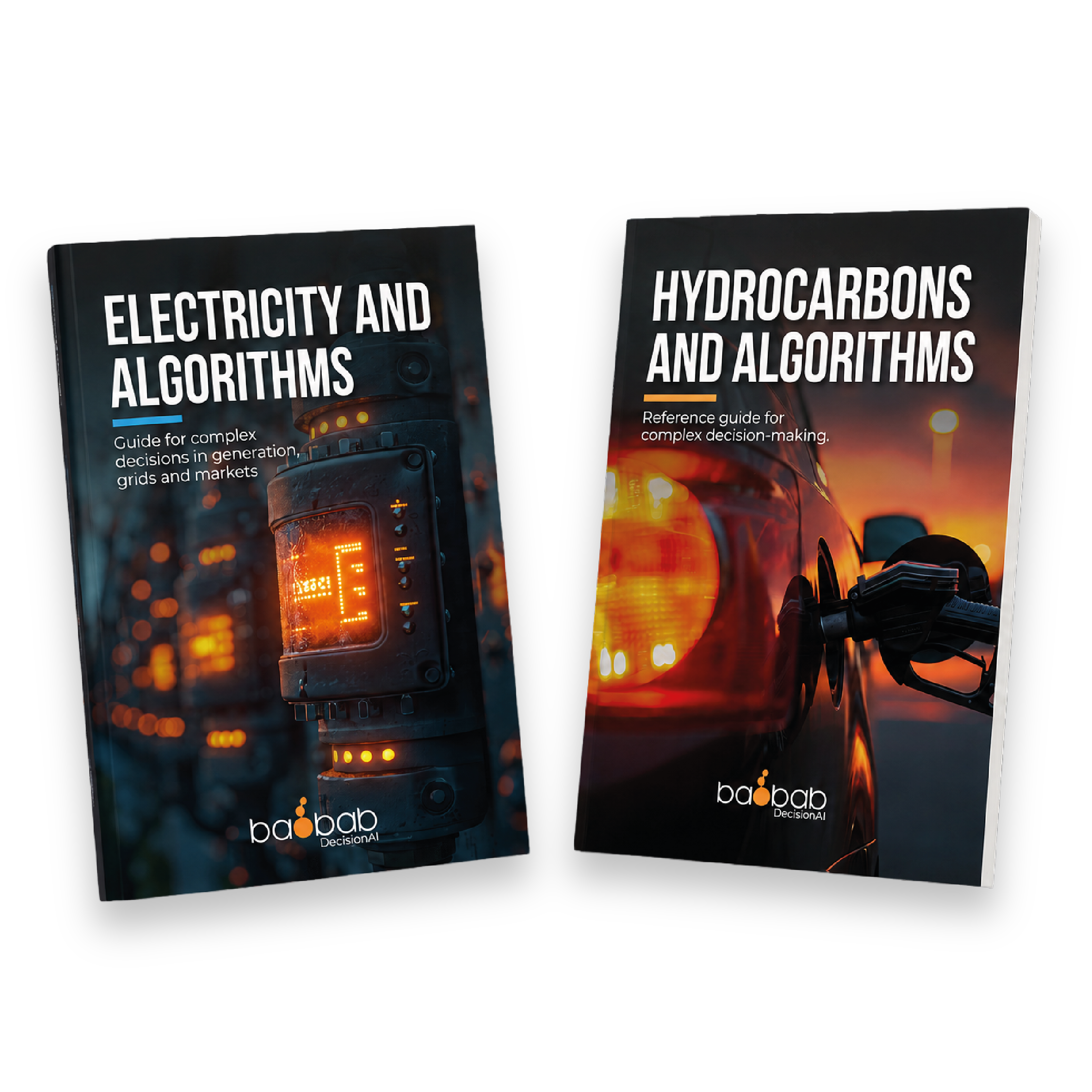
Submit your download request.
These guides are limited in edition. Each request will be reviewed individually, and one copy will be sent per verified profile until the available units run out.
Use casesSome use cases
Discover how our solutions have improved efficiency and optimized operations in the energy sector.
Energy production optimized with Decision AI
- Industry: Energy
- Challenge: Improve efficiency in industrial gas production by adjusting energy consumption based on demand, energy prices, and operating constraints.
- Approach: Decision AI uses advanced predictive models to adjust plant configuration in real time, optimizing production and energy consumption.
- Results: Reduced planning time, lower energy consumption, increased productivity, and operational flexibility.
- Key metrics: Reduced operating costs by €300,000–€500,000 per plant annually.
Optimizing energy supply for the next-day market
- Industry: Energy
- Challenge: Improve competitiveness in the next-day energy market by optimizing supply based on production, demand, and pricing strategy.
- Approach: Implementation of Decision AI to model supply and demand scenarios, optimizing the energy production and marketing strategy.
- Results: Reduced costs and maximized revenue by optimizing energy supply.
- Key metrics: Increased revenue of €500,000 per month.
Optimization of wind farm layout
- Industry: Energy
- Challenge: Increase energy production in wind farms by optimizing wind turbine siting.
- Approach: Use of decision intelligence tools to analyze wind, terrain, and technical constraint data to optimize wind turbine placement and minimize interference.
- Results: Increased energy efficiency, reduced interference losses, and increased renewable energy generation.
- Key metrics: Increased electricity production by 3%
Optimization of hydroelectric production
- Industry: Energy
Challenge: Maximize the profitability of hydroelectric generation by adjusting the use of reservoir flow based on market demand and prices. - Approach: Application of Decision Intelligence to predict price fluctuations in the electricity market and optimize the opening and closing of floodgates based on the best financial performance.
- Results: Efficient use of water resources, reduced waste, and increased revenue from energy sales.
- Key metrics: 7% increase in total revenue.
NewsNews and trends in AI applied to management, production, and supply chain in the energy sector.
Discover how to improve your strategic decisions. For example, we’ve managed to increase revenue by up to €500,000 per month by optimizing offers in the next-day energy market.



Stay informedDon’t miss anything about Decision Intelligence
Join our community. Follow us on social media and subscribe to our newsletter to stay up to date with the latest in AI applied to business.


