Madrid, November 25, 2025 – At Baobab AI, we hosted the Supply Chain Summit 2025, an event that brought together leaders and experts in operations, logistics, and technology to address a common challenge: how to make better decisions in increasingly complex and uncertain supply chains through Artificial Intelligence, Advanced Analytics, and mathematical optimization.
Held at Espacio Downtown Madrid and sponsored by Gurobi, the event featured participation from companies such as Adient, CityLogin, Cofares, Moeve, Nippon Gases, Vanderlande, Nakire, among others, as well as Baobab AI and Baobab SupplyOps leadership and subject-matter experts.
From demand forecasting to prescriptive AI
The day was moderated by David Sánchez, Chief AI Sales Officer at Baobab AI, who introduced each block by connecting business challenges with the capabilities of Decision AI.
The first presentation was delivered by Aitor Madoz, a supply chain expert, who spoke about the role of S&OP and demand forecasting in a volatile environment. He emphasized the importance of segmentation and data cleansing, and how combining statistical models with AI techniques helps reduce erratic demand, avoid extra costs, and improve customer service.
Next, Daniel Latorre, Managing Director at CityLogin, focused on new models for urban delivery shaped by the rise of e-commerce, emission restrictions, urban congestion, and pressure for faster and more sustainable deliveries. He showed how digital twins and public-private collaboration can enable the design of replicable urban microhubs and leverage existing infrastructure—such as metro networks—for a more efficient last mile.

Inventory, warehousing, and intelligent automation
The inventory management block was led by Óscar Roque, Director of Supply Chain Management at Adient, who shared a smart stock management project developed together with Baobab. He explained how integrating data from different plants and terminals, combined with optimization models, improves availability, reduces excess inventory, and frees up planners’ time for higher-value tasks.
Warehouse efficiency was the focus of the session by Gonzalo García, Director of Outbound Operations at Cofares. He detailed how location redesign, time analysis, and mathematical modeling increased productivity in their facilities by around 20%. He highlighted the importance of working hand-in-hand with the people operating the warehouse daily to ensure changes are realistic and sustainable.
Discover more about Decision AI in Logistics
The intralogistics automation perspective came from Luis Escobedo, Managing Director WH Solutions at Vanderlande; Javier Martínez, CEO at Nakire; and José María Izquierdo, Logistics Consultant at Iteral. They presented AMR robotics, sorting solutions, and continuous-flow automation. They explained how integrating these systems with decision-making platforms helps avoid bottlenecks, regulate flows with smart buffers, and adapt operations to real demand almost in real time.
In the same block, Jaime Sotomayor, Strategic Accounts & Project Director at Baobab AI, showed how combining forecasting, optimization, and digital twin models within the WMS allows companies to “move from managing what has already happened to anticipating what will happen.” He emphasized that only a small fraction of warehouses worldwide operate truly dynamically and that is precisely where Decision AI makes the difference.
Applied mathematics for logistics and transportation
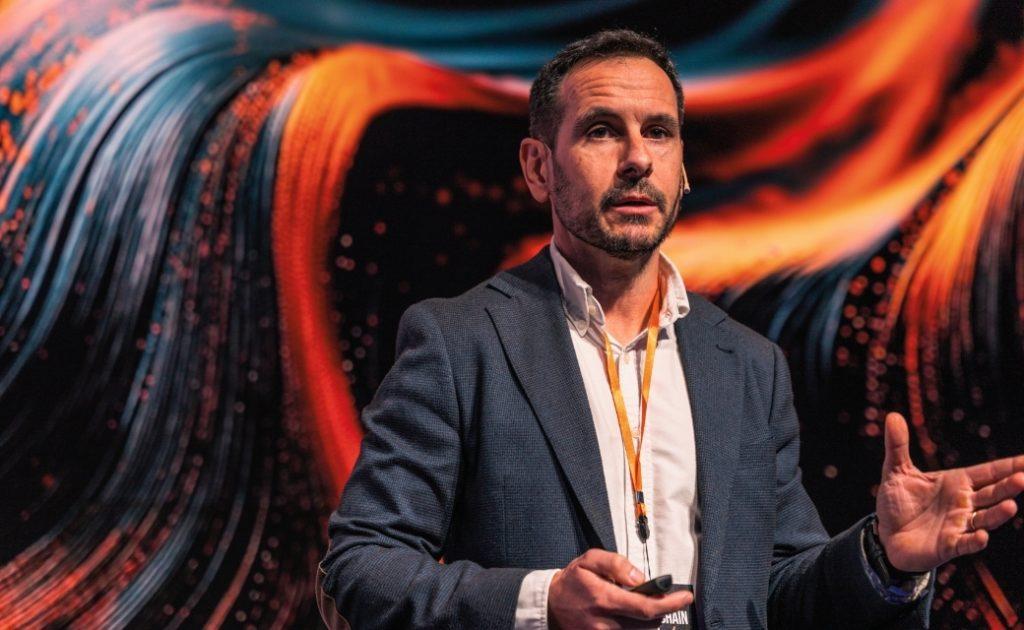
A conceptual yet highly practical perspective was offered by Álvaro García Sánchez, co-founder of Baobab AI and professor at UPM, in his talk “Injecting Mathematics into Logistics.” He advocated for combining expert knowledge with optimization and simulation models, and noted that generative AI on its own does not make decisions it requires structure, data, and human validation to deliver real business impact.
Transportation challenges were addressed by Raimundo Gonzalo, CEO of Baobab SupplyOps, who explained that the goal is not to replace TMS solutions but to complement them with more flexible and upgradeable prescriptive layers. Together with Luis Pita-Romero, Data Solutions Architect & Operations Research / Data Science at Baobab, they presented cases of prescriptive replenishment, integrated route planning, and overland transport optimization, aimed at reducing costs, improving service, and increasing resilience to disruptions.
Decarbonization and logistics network design
In the energy sector, Antonia Fernández, Head of Energy Parks Logistics at Moeve, explained how the CLEAR project, developed with Baobab, enables decarbonized operations and proactive issue detection in Energy Parks logistics. They moved from manual, Excel-based planning to a system that provides daily, monthly, and strategic visibility of efficient asset repositioning. She highlighted that freeing the team from repetitive tasks enables them to focus on new business and solutions.
Logistics and production network design took center stage in the presentation by Pablo Rodríguez, Smart Operations Processes & Tools Engineer Europe at Nippon Gases, who showcased a Supply Chain Decision Support Tool developed with Baobab and powered by Gurobi. This flexible, KPI-driven tool enables the evaluation of fuel distribution scenarios and supports more rigorous tactical and strategic decision-making.
Gurobi and Baobab: mathematical optimization powering business
Representing the event sponsor, Jan Schwarzkopf, Senior Account Manager Strategic Alliances EMEAI at Gurobi, focused on the role of optimization solvers as the silent engine behind many Decision AI applications. He highlighted how, together with partners like Baobab, Gurobi’s technology powers solutions that help companies make faster, more accurate, and more scalable decisions across sectors such as logistics, industry, and energy.
Closing: from Generative AI to Decision AI
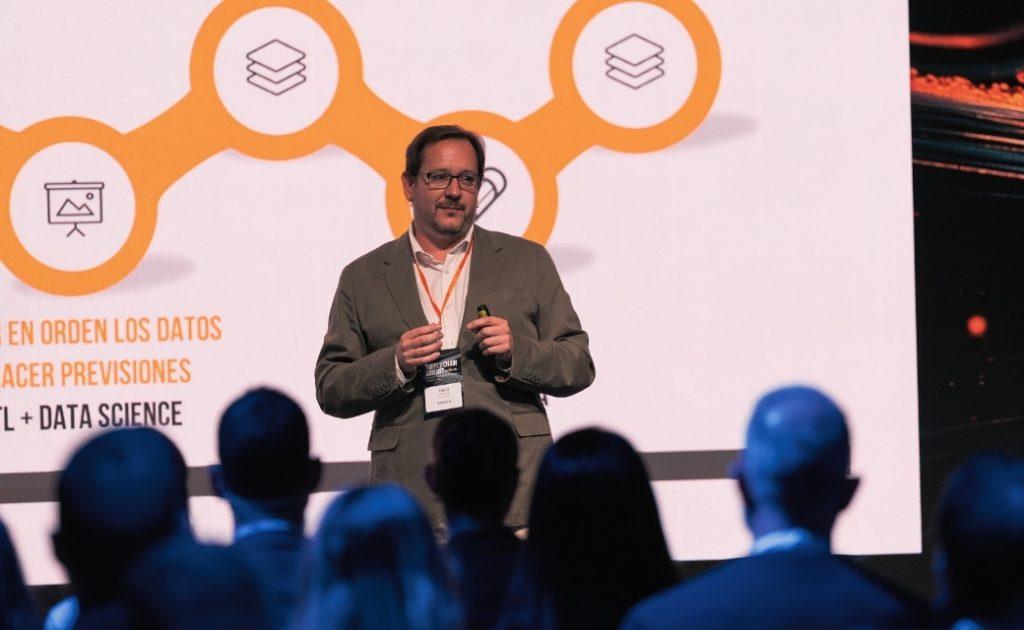
The event concluded with remarks from Pablo Castiella, CEO and co-founder of Baobab AI, who discussed the contrast between generative AI and Decision AI. He noted that while the former is highly useful for content creation and daily tasks, true competitive advantage emerges when mathematical models, high-quality data, and joint client-provider teams work together.
Castiiella also presented Baobab’s Decision Ops vision: a platform and operating model that brings advanced models into production, connects them with engines like Gurobi, and ensures a continuous improvement cycle for business decision-making.
Summary video