
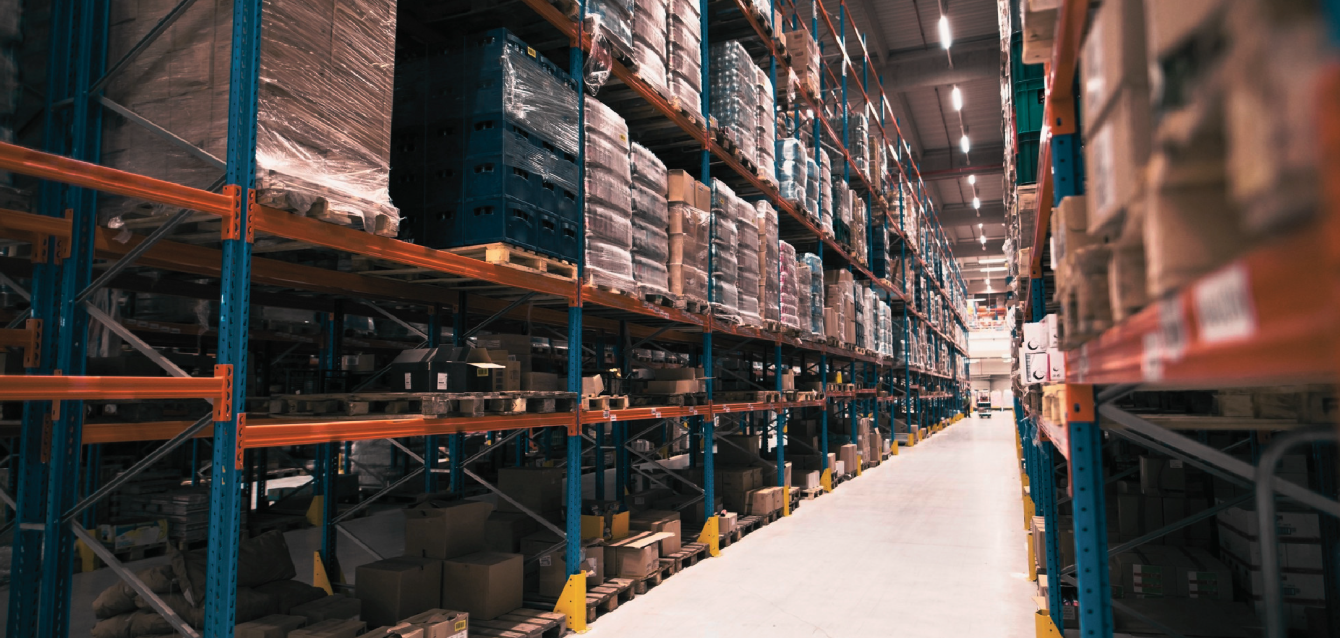
The supply chain has become the beating heart of business competitiveness. In the wake of years of disruption, from the pandemic to geopolitical and energy tensions, the pressure on logistics and planning leaders has only intensified.
According to McKinsey, companies that have integrated artificial intelligence into their operations have achieved inventory reductions of 20–35% and logistics cost savings of 5–20%. At the same time, a Xeneta report shows that more than 76% of European companies experienced supply chain disruptions in 2024, underlining the urgency of building more resilient and optimized networks.
In this context, Decision AI has emerged as a strategic ally. It’s not just about automating processes, but about transforming fragmented data into intelligent decisions that have a direct business impact.
The 10 Keys to Optimization
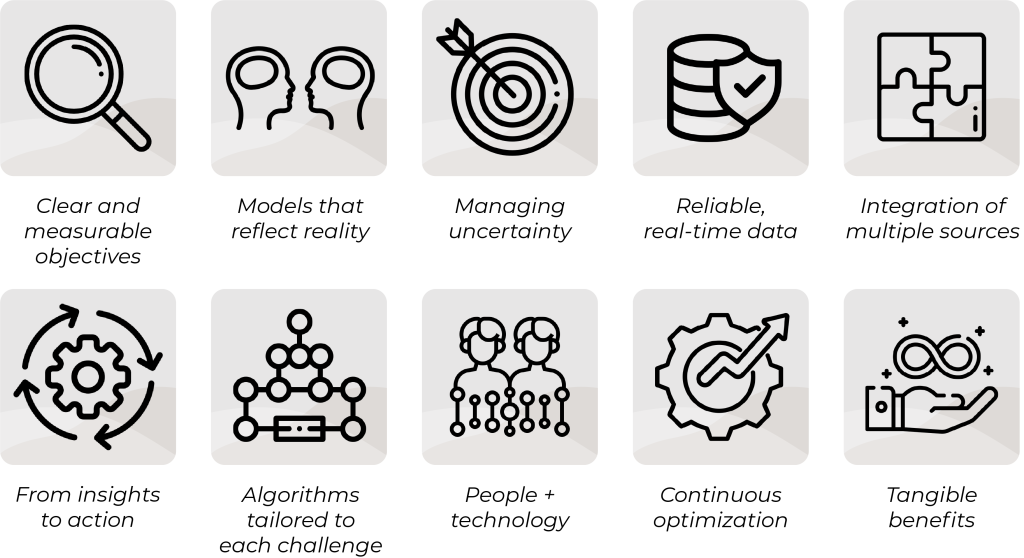
1. Clear and measurable objectives
Every strategy starts with concrete goals: lowering costs, improving service levels, or reducing carbon footprint. Yet only 23% of supply chain leaders report having a formal AI strategy in place (Supply & Demand Chain Executive, 2025). Moreover, Gartner projects that 50% of supply chain organizations will invest in applications supporting AI and advanced analytics before 2024.
2. Models that reflect reality
A mathematical model acts as a “digital twin” of the supply chain. The closer it mirrors reality, the more effective it is at generating efficient plans.
3. Managing uncertainty
Volatility is the new normal. Companies that adopt probabilistic scenarios have been able to improve demand planning accuracy by 20% (ScienceDirect, 2025).
4. Reliable, real-time data
Data quality remains the foundation. Without precise, up-to-date information, algorithms cannot generate useful recommendations.
5. Integration of multiple sources
ERP systems, transport management, inventory, IoT sensors… Data fragmentation is one of the biggest challenges.
6. From insights to action
Dashboards alone aren’t enough. Optimization must translate into concrete plans: what to produce, where to store, how to transport.
7. Algorithms tailored to each challenge
There is no one-size-fits-all algorithm. Routing, inventory, and production problems each require specific approaches. Choosing the right technology for the challenge can drive service improvements of up to 65% (ArtSmart, 2024).
8. People + technology
AI provides recommendations, but people validate, adjust, and apply decisions. True value emerges when business expertise and optimization technology work together.
9. Continuous optimization
Supply chains evolve daily: new regulations, fluctuating energy costs, shifting demand. Optimization should be a continuous process, not a one-off project.
10. Tangible benefits
Optimization requires investment, but the return is clear:
- 15% lower logistics costs (ArtSmart, 2024).
- 65% improvement in customer service levels (ArtSmart, 2024).
Related content
These aren’t promises; they’re the results already being achieved by companies that embrace Decision AI.
The supply chain is undergoing a paradigm shift. Data alone is no longer enough. The real advantage lies in deciding better: anticipating disruptions, optimizing resources, and achieving sustainability without sacrificing efficiency.
At Baobab AI, we’ve spent more than a decade helping leading companies transform their planning and logistics with Decision AI. What once seemed complex and costly is now becoming a strategic capability to compete in an increasingly uncertain world.


