

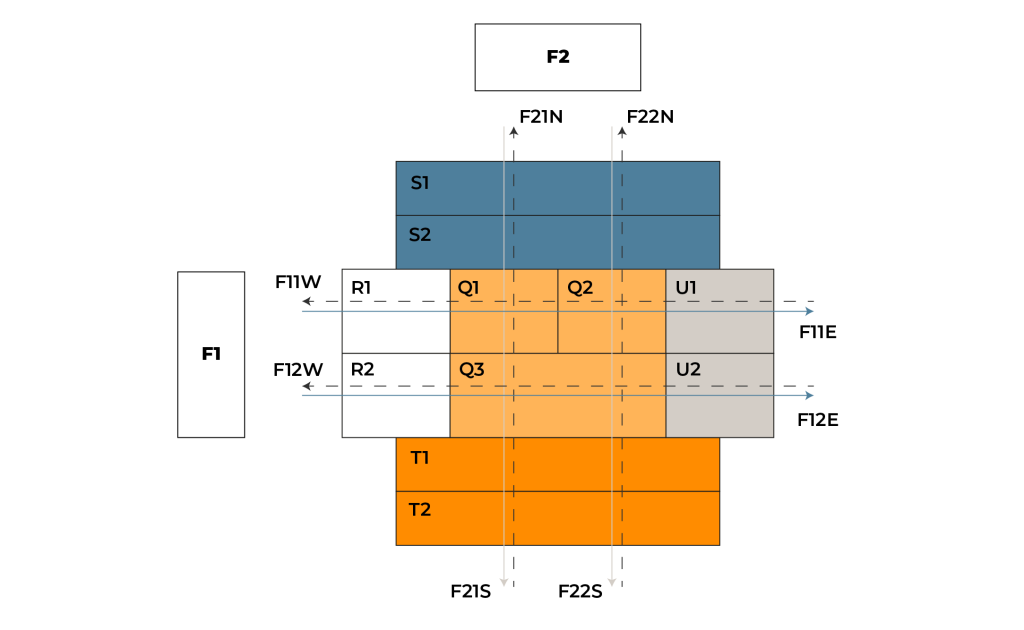
An air traffic control system is not something that can be described as simple. If you add to that the fact that the European network manager has around twenty countries to coordinate simultaneously, things do not get any easier.
Not very different from national energy supply, airspace functions as a market between “suppliers” of airspace (Air Navigation Service Providers, or ANSPs) and “demanders” of that space (aircraft operators, or AOs, in other words, commercial airlines).
Due to the short-sightedness of each actor working for their own benefit, inefficiencies arise in how this market operates. One example is that suppliers may over-invest in capacity, and that capacity is not used in the most efficient way by operators.
To address some of these problems, there is a European project called COCTA, which is proposing alternatives based on a multidisciplinary methodology that includes economics, management, air traffic control, and mathematics (optimization).
The project participants include universities in Serbia, the UK, and Germany. More detailed information is available here.
Applications
One of the ideas presented in the study’s results, and explained in much greater detail and precision in its publications, is to give more power to the European regulator to use demand data to guide (or propose) investment in new infrastructure.
Another idea is to implement a more sophisticated valuation system (for example, one incorporating dynamic pricing) for existing capacity through the regulator, in order to ensure efficient use of the available airspace.
It is often necessary to implement stochastic optimization models that take into account potential events that may alter supply or demand over a given period, as well as increases or decreases in future demand.
The project itself includes the definition of short, medium, and long-term policies. Many of these policies are built around the use of optimization models to obtain the most efficient solution for the system as a whole.
The project is nearing completion, and a closing workshop will be held in Brussels on September 19th. More details are available here.
The project documentation is public and can be found on the publication’s page.


