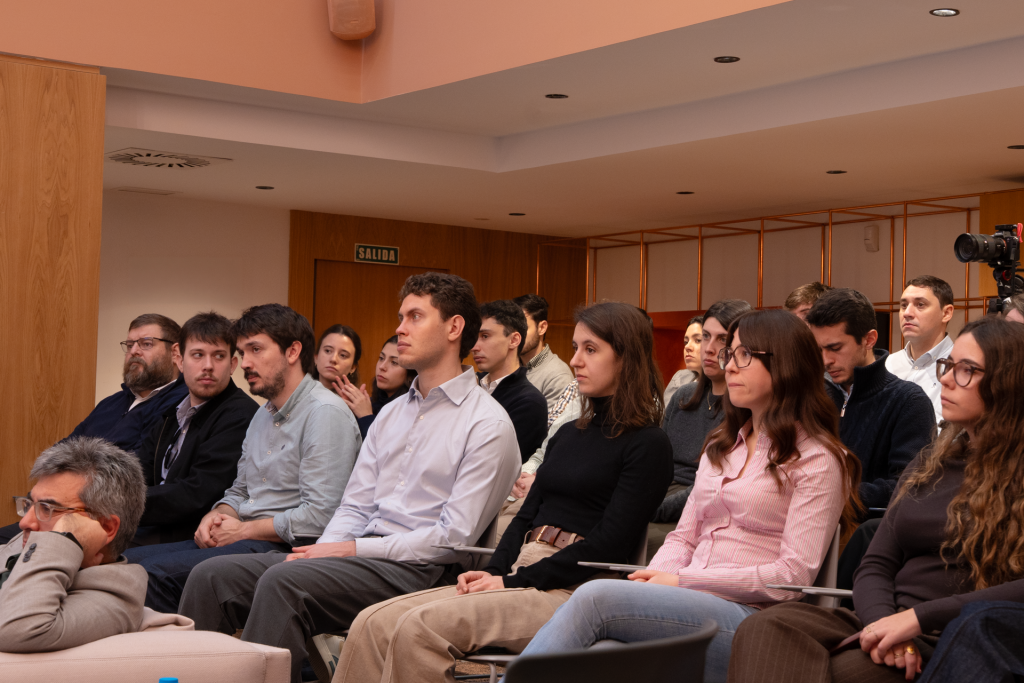
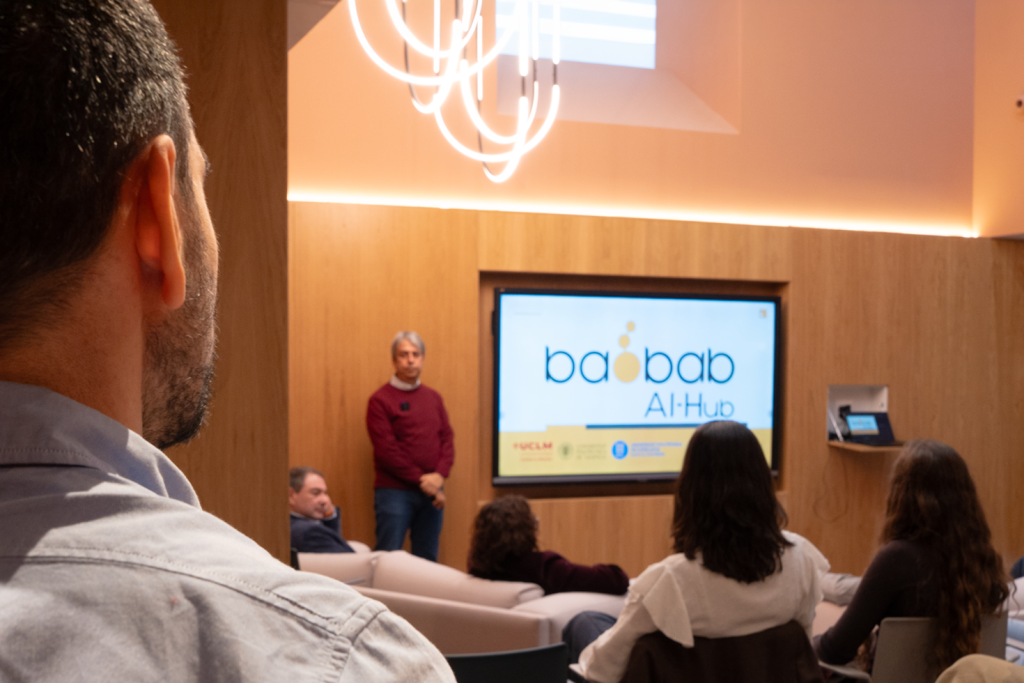
On February 12 and 13, we held the first Baobab AI Hub meeting. This initiative formalizes a stable collaboration network between Baobab and a group of leading professors in optimization, operations research, and advanced analytics.
The Hub is not conceived as a theoretical forum, but as a strategic structure to strengthen the connection between high-level research and the complex operational challenges we solve as a company.
An expert council for high-complexity challenges
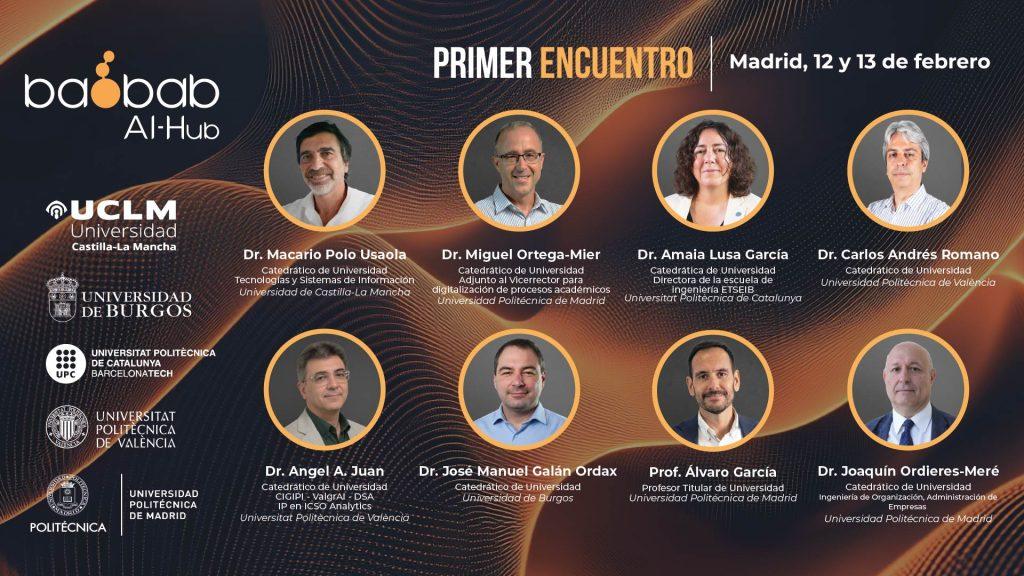
In this first edition, the Hub was formed by:
- Dr. Macario Polo Usaola (Universidad de Castilla-La Mancha)
- Dra. Amaia Lusa García (Universitat Politècnica de Catalunya)
- Dr. Joaquín Ordieres-Meré (Universidad Politécnica de Madrid)
- Dr. Carlos Andrés Romano (Universitat Politècnica de Valencia)
- Dr. José Manuel Galán Ordax (Universidad de Burgos)
- Dr. Ángel A. Juan (Universitat Politècnica de Valencia)
Together with Baobab’s partners and professors Miguel Ortega-Mier and Álvaro García.
Want to learn more about our vision?
Discover the innovation ecosystem on the Baobab AI Hub website
February 12: Reality-checking against operational constraints
The first day focused on working sessions around real use cases handled by Baobab’s technical team. There was no abstract theory, only advanced planning problems, combinatorial optimization, and decision system design in production environments.
The technical discussion focused on three critical pillars:
- Model formulation: How to structure real-world problems with multiple operational constraints without losing tractability.
- Hybridization: Integrating mathematical optimization, simulation, and machine learning to capture real-world uncertainty.
- Scalability: Ensuring these models, developed in a controlled environment, maintain performance when deployed in industrial production architectures.
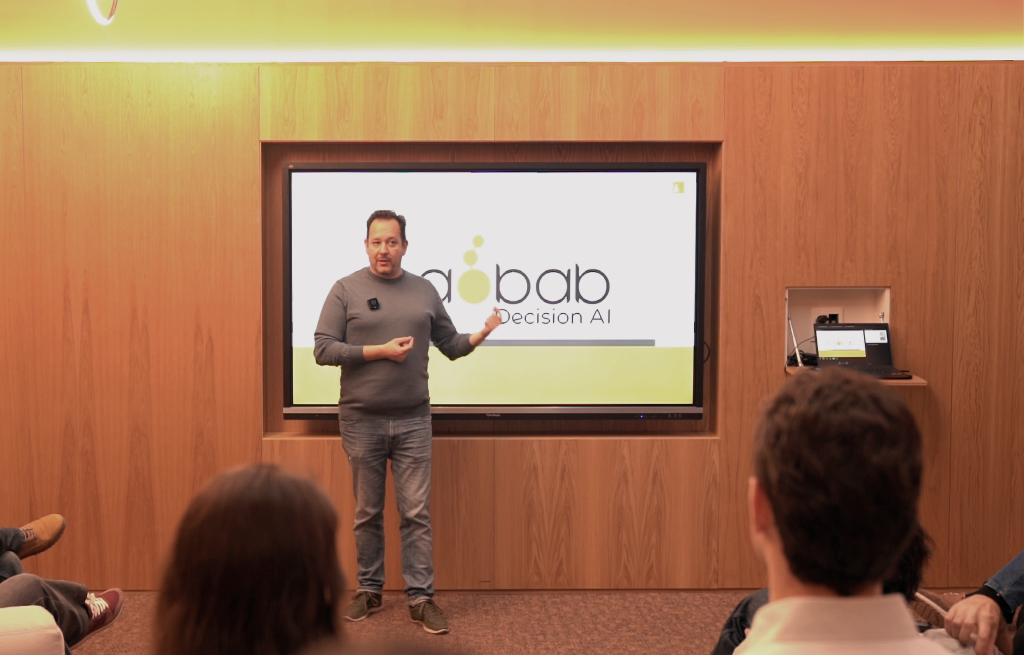
February 13: Frontiers of Decision AI
The second day was dedicated to analyzing the trends that will shape the future of prescriptive analytics. Speakers addressed key topics for the evolution of our solutions:
- Standardized generation of optimization models to reduce implementation time.
- The use of advanced metaheuristics for large-scale problems.
- Modeling complex industrial systems through network- and agent-based approaches.
A collaboration with long-term potential
The Baobab AI Hub turns long-standing technology transfer relationships into a stable collaboration framework. For Baobab, this represents a qualitative leap in our ability to respond: it allows us to test approaches with academic depth and ensure our developments evolve in direct dialogue with the most cutting-edge research lines at Spanish universities.