Given the pressure on costs and the need to operate in near real time, the ability to anticipate, simulate, and optimize operations has evolved from a competitive advantage into a fundamental requirement.
In this context, the combination of data generation and advanced decision intelligence tools is opening up new opportunities to improve the efficiency and resilience of supply chains. However, one factor continues to quietly determine the scope of these capabilities: data quality.
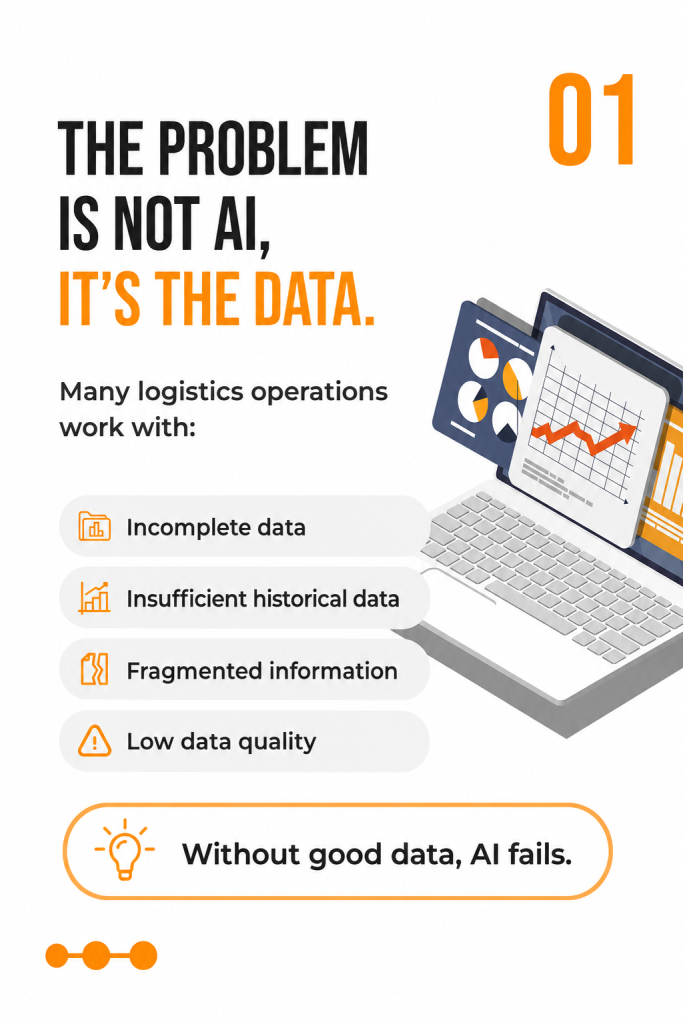
Rather than a purely technical problem, this is a “structural bottleneck.” Decision-making in logistics, from route planning and inventory management to demand forecasting, depends on reliable, complete, and representative data. Yet the reality is often very different: fragmented, biased, or entirely inaccessible data due to regulatory or confidentiality restrictions. This gap limits the application of advanced models and becomes a “silent killer” in AI projects.
This is where synthetic data begins to play a significant role not as a replacement for real data, but as a strategic complement.
Synthetic data: experimenting without risk
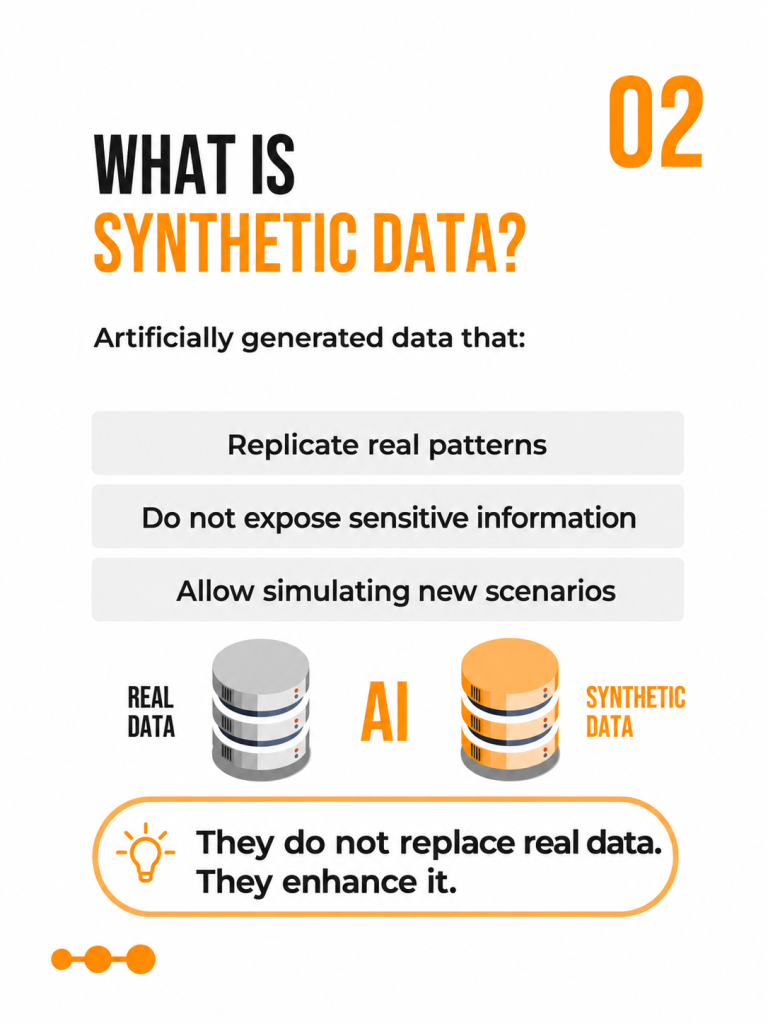
Synthetic data consists of artificially generated datasets that reproduce the properties and patterns of real-world data without containing sensitive information. Its value lies not only in addressing privacy concerns, but also in something far more operational: it enables organizations to work when data does not exist, is inaccessible, or simply lacks the required quality.
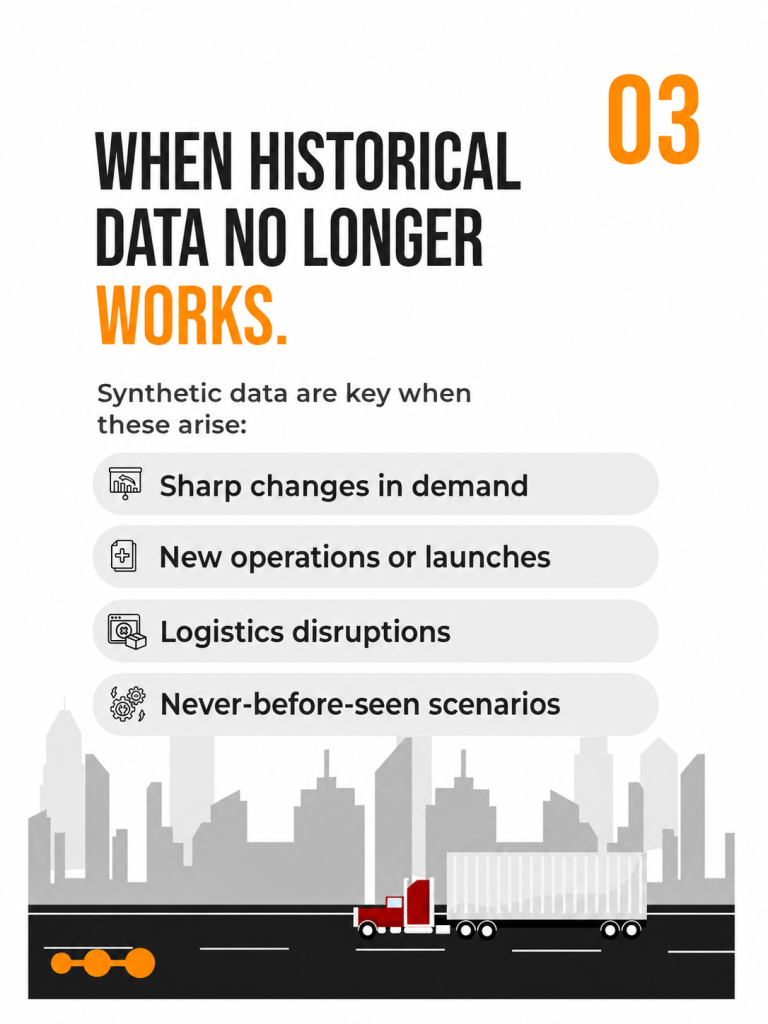
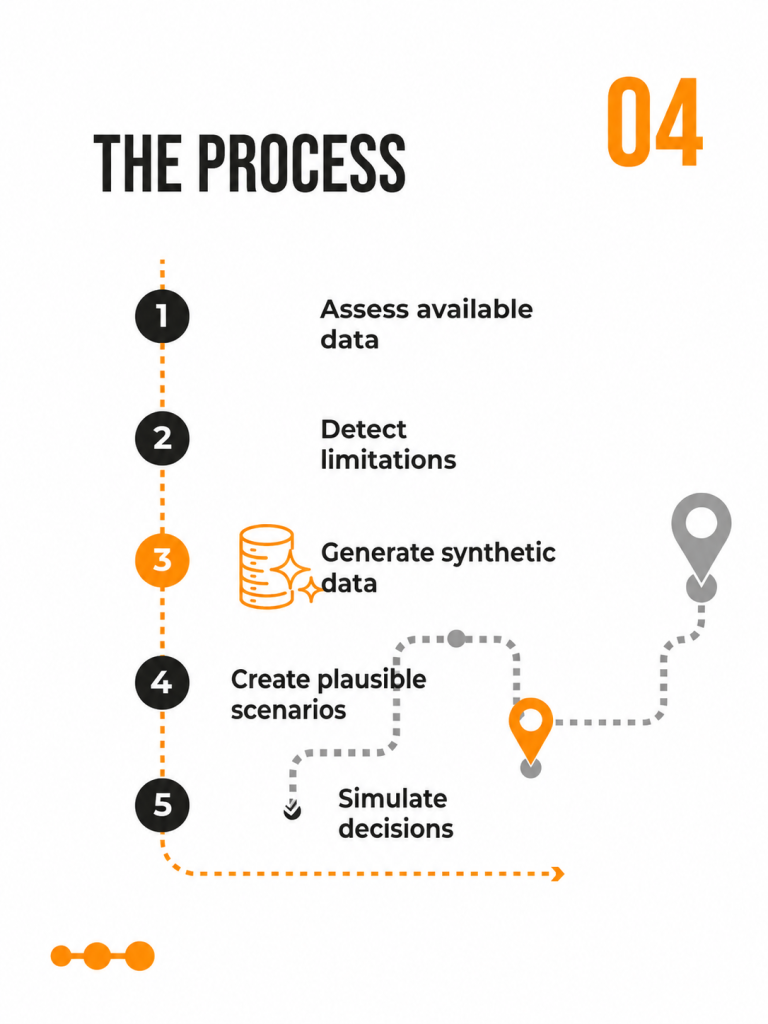
In logistics, this limitation is more common than it may seem. New business lines, shifts in demand, and operational disruptions create situations in which historical data is no longer useful. In these cases, synthetic data makes it possible to build plausible scenarios for modelling purposes. This opens the door not only to simulating what might happen, but also to actively designing how the system should behave before events occur. For example, organizations can generate demand scenarios to test the resilience of a network or model complex incidents that are not represented in historical data.
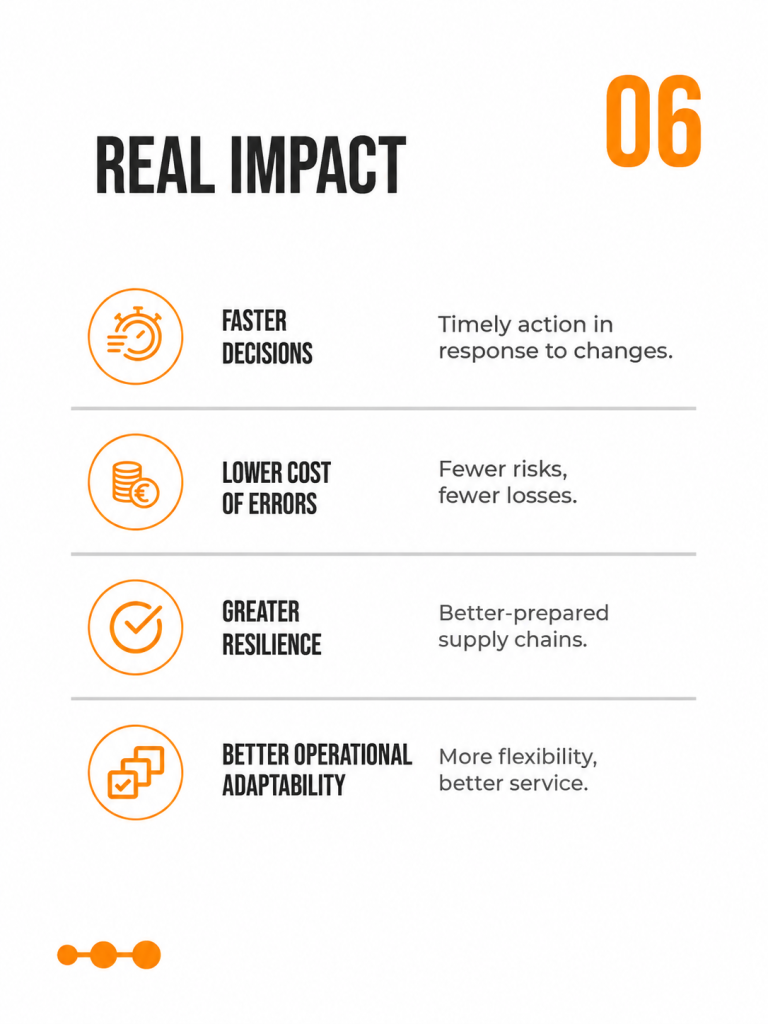
Moreover, when the data-generation process itself is supported by machine learning techniques, data quality can be improved iteratively. As more information becomes available, the models can be adjusted to produce increasingly representative data, narrowing the gap between simulation and reality. In practice, this accelerates testing cycles, reduces the cost of errors, and enables better-informed decisions, even in highly uncertain environments.
From shared data to coordinated decisions: SEDIA´s framework
Another significant change concerns how data is shared and used. In contrast to siloed models, a collaborative approach supported by public-sector initiatives is beginning to take hold. In Spain, programmes such as SEDIA Sectoral Data Spaces promoted by the Ministry for Digital Transformation and the Civil Service, are accelerating this adoption.
SEDIA has two main objectives: to foster data spaces that enable secure information exchange between industry stakeholders, and to promote AI solutions that make it possible to use that data effectively. This approach helps create a comprehensive view of the supply chain, but it also introduces an additional requirement: having more data is not enough; organizations must also know how to use it consistently.
From data to decisions: creating tangible value with Baobab AI
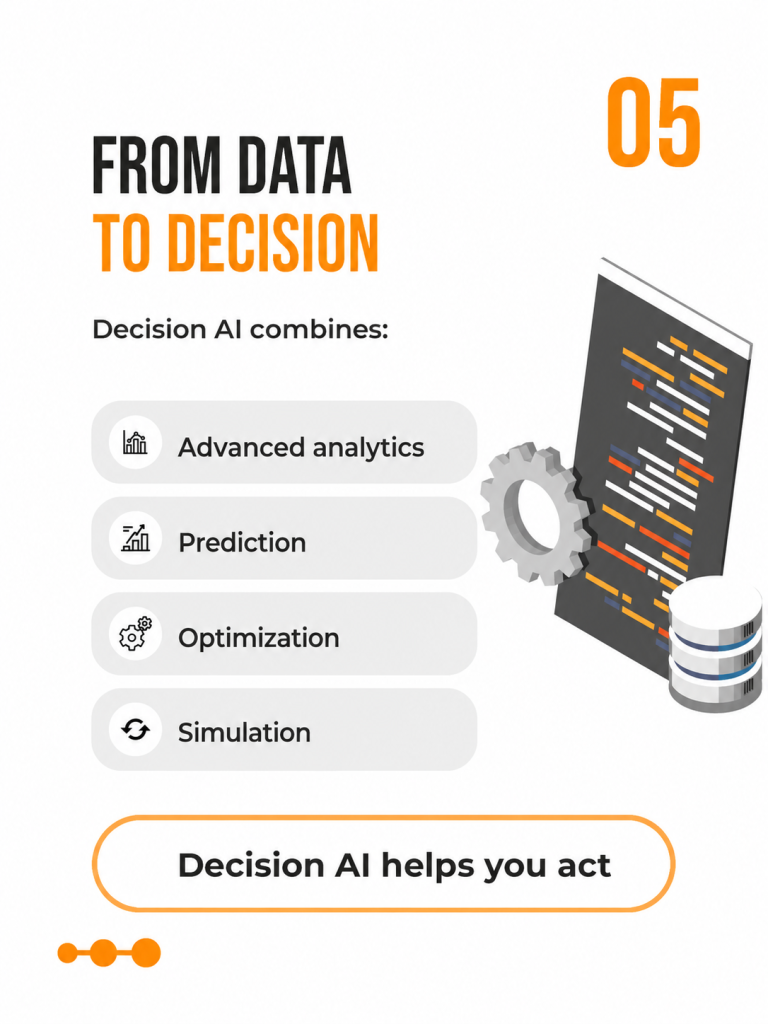
Access to data, whether real or synthetic is only the starting point. Value is created when that data is transformed into operational decisions. Decision Intelligence, or Decision AI, addresses precisely this need.
In this area, Baobab AI develops capabilities that integrate synthetic data generation, simulation, and optimization to support decision-making in complex environments. Its approach is based on a clear premise: technology only makes sense when it has a direct impact on operations.
The project “Development of a Machine Learning Technology for Advanced Data Processing and Synthetic Data Generation for Integration into Data-Sharing Ecosystems” has been funded by the Ministry for Digital Transformation and the Civil Service.
The applications of Decision AI and synthetic data developed by Baobab AI are wide-ranging:
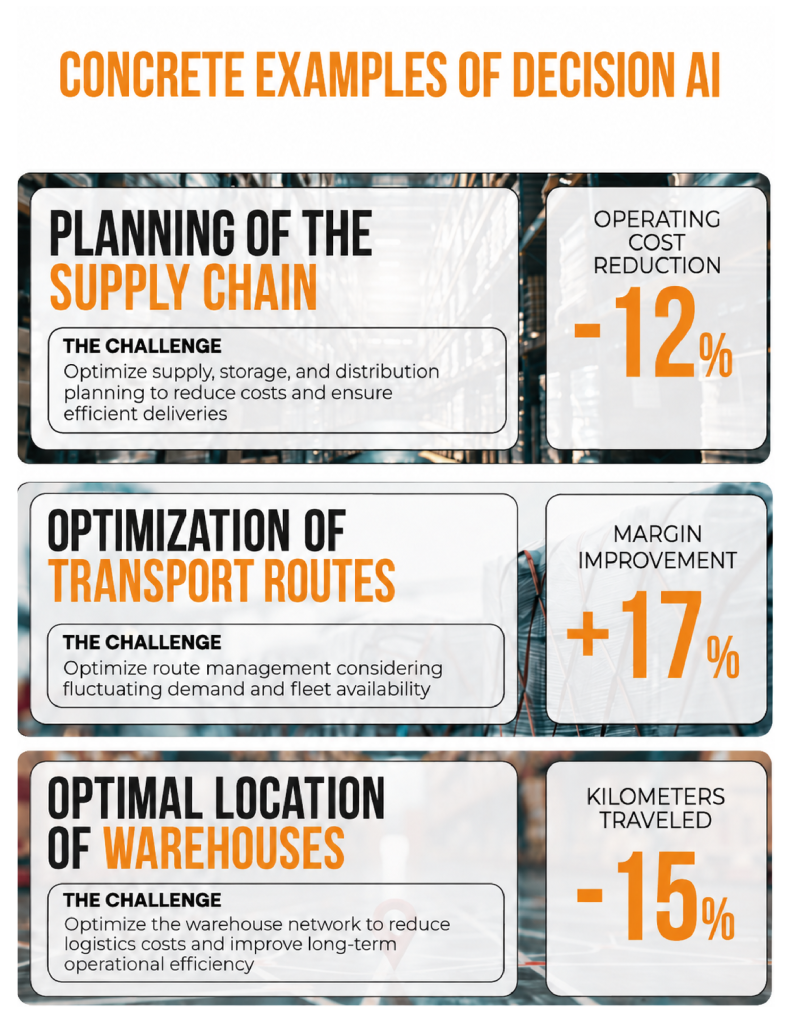
Supply chain planning: Optimizing procurement, storage, and distribution to reduce costs for multinational companies.
Transport route optimization: Managing routes for courier and delivery companies while accounting for fluctuating demand and fleet availability.
Strategic warehouse network improvement: Optimizing the opening and closure of facilities to minimize overall logistics costs.
Optimal facility location: Reducing travel distances and improving long-term operational efficiency.
From Theory to Operations
Beyond the technological narrative, the main challenge remains bringing these capabilities into day-to-day operations. High-impact projects, such as those developed by Baobab AI within programmes such as SEDIA, share three characteristics: they use appropriate data, rely on robust models, and are designed around a clear operational objective.
The combination of synthetic data, data spaces, and decision intelligence is not a promise for the future. It is a tool already available to organizations seeking to improve their responsiveness in an increasingly demanding environment.
To learn more about Decision AI and its applications in the logistics sector, download Baobab AI’s free e-book.