

In today’s industrial landscape, having access to data is no longer a competitive advantage; the real differentiator lies in the decisions made with it. According to McKinsey’s The State of AI in 2025 report, leading industrial organizations have moved beyond basic predictive models to deploy Decision AI (also known as Decision Intelligence) at scale. The study shows that companies embedding optimization and machine learning models at the core of their operations report productivity gains of over 30%.
This shift signals a true paradigm change: it is no longer enough to know what is likely to happen—we need to understand what actions to take to maximize value or minimize cost. In manufacturing and logistics, this translates into systems capable of orchestrating supply chain complexity through the discipline and rigor of applied mathematics.

Business benefits and impact
Applying Decision AI through advanced modeling has a direct impact on a company’s resilience and profitability, addressing its two core financial pillars:
- Operational cost optimization (OPEX): a significant improvement in the efficiency of critical resources—energy, raw materials, and labor. These techniques enable experts to uncover and eliminate hidden logistical inefficiencies, such as suboptimal routing or excess inventory, resulting in leaner, more profitable day-to-day operations.
- Capital return maximization (CAPEX): robust analytical support for large-scale strategic decisions. Investments in new plants, distribution centers, or high-capacity machinery are grounded in accurate simulation and profitability models, reducing the risk of underutilized assets.
- Sustainability and efficiency: systematic waste reduction and optimized energy consumption across thermal and electrical processes. This makes it possible to align cost-saving initiatives with environmental regulations, delivering measurable reductions in carbon footprint.
- Operational resilience: the ability to adjust production and supply plans within minutes in response to market disruptions or supply chain crises, ensuring business continuity with minimal financial impact.
What is Decision AI or Decision Intelligence, really?
While traditional Business Intelligence (BI) focuses on analyzing “snapshots of the past,” Decision Intelligence has emerged as a cross-functional AI discipline that brings together a range of advanced techniques—from data science to operations research, among others. Its core mission is to turn information into executable decisions, identifying the optimal course of action within a complex web of constraints and business objectives.
In an industrial context, this “best possible response” is far from an abstract idea. Instead, it is structured around three interconnected levels that collectively define the pace and direction of the organization:
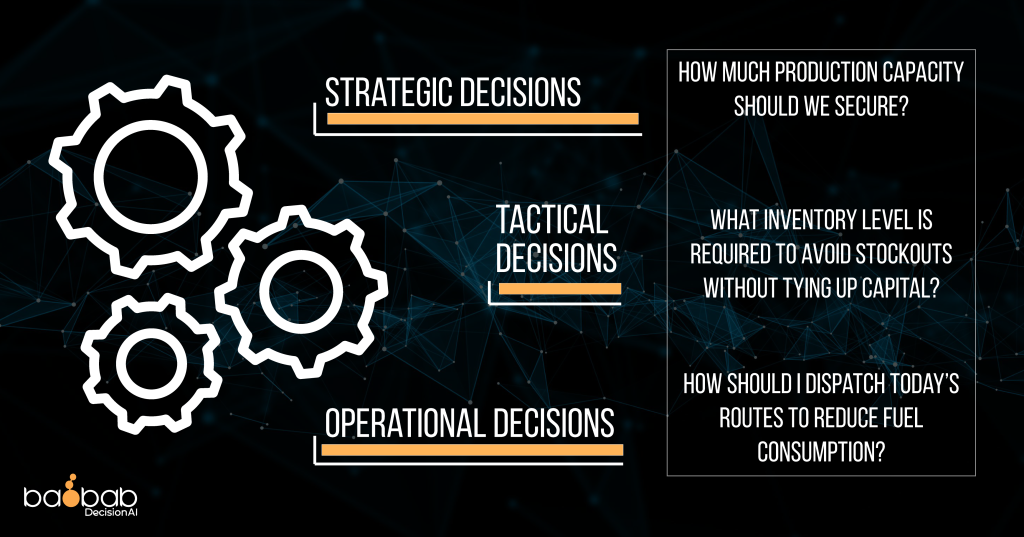
- Strategic level: this is where decisions shaping long-term competitive advantage are made. The question is not what to produce today, but where factories and warehouses should be located over the next five years, how much production capacity to secure, or which asset investments will sustain growth. At this level, Decision AI focuses on modeling the logistics network and infrastructure that support everything else.
- Tactical level: this is the realm of Sales and Operations Planning (S&OP). Here, Decision AI helps balance forecast demand with real operational capabilities. It determines optimal inventory levels to avoid stockouts without tying up excessive capital, and it plans aggregated monthly production so supply flows smoothly without bottlenecks.
- Operational level: this is optimization at the most granular level of execution. How should routes be dispatched today to minimize fuel consumption? In what sequence should orders enter the assembly line? What price should be set at each point of sale to maximize margin given local competition? At this level, mathematical precision translates into tangible savings across millions of daily decisions.
As highlighted by Boston Consulting Group in its AI Radar 2025 report, success does not come from deploying isolated tools, but from redesigning entire functions around integrated mathematical models—an approach capable of capturing up to three times more value than fragmented initiatives.
Decision Intelligence / Decision AI applications: use cases and cross-functional benefits
Thanks to the versatility of artificial intelligence, Decision Intelligence can be applied to virtually any manufacturing or logistics industry. It is not a rigid piece of software, but a problem-solving capability that adapts to the specific constraints and realities of each sector.
By way of example, the following milestones illustrate how Decision Intelligence is transforming operations across different industrial domains:

- Energy efficiency in industrial processes: in highly energy-intensive sectors such as gas separation, advanced modeling makes it possible to adjust production minute by minute based on electricity market prices. This approach has delivered recurring savings of between €300,000 and €500,000 per plant per year, optimizing energy consumption without compromising supply reliability.
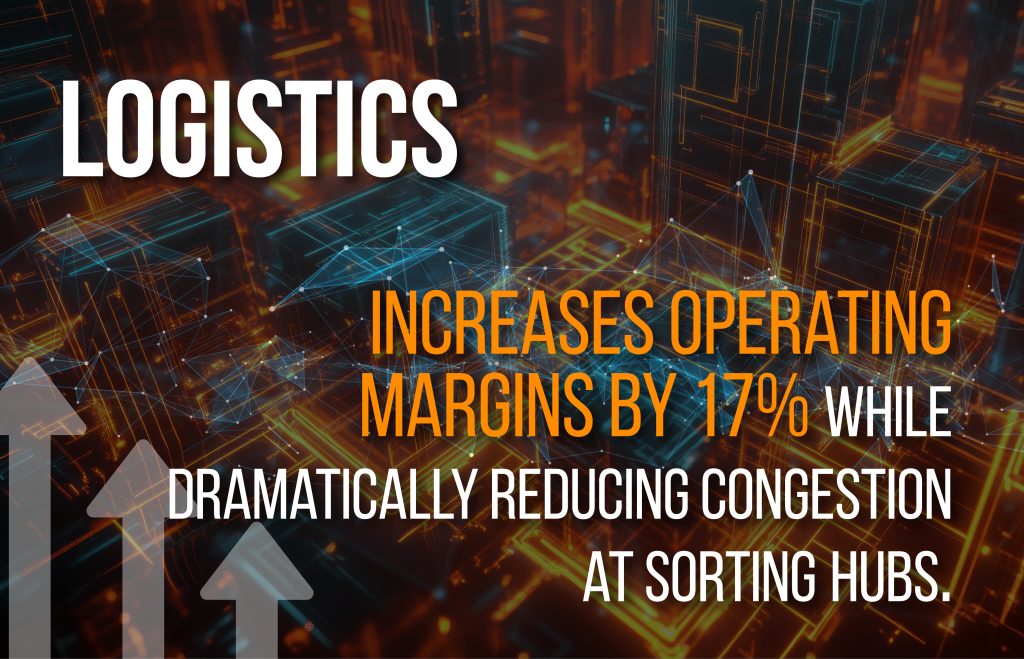
- Logistics: for operators handling massive volumes—such as parcel delivery networks processing more than 50 million shipments annually—the use of long-haul route optimization algorithms increases operating margins by 17% while dramatically reducing congestion at sorting hubs.
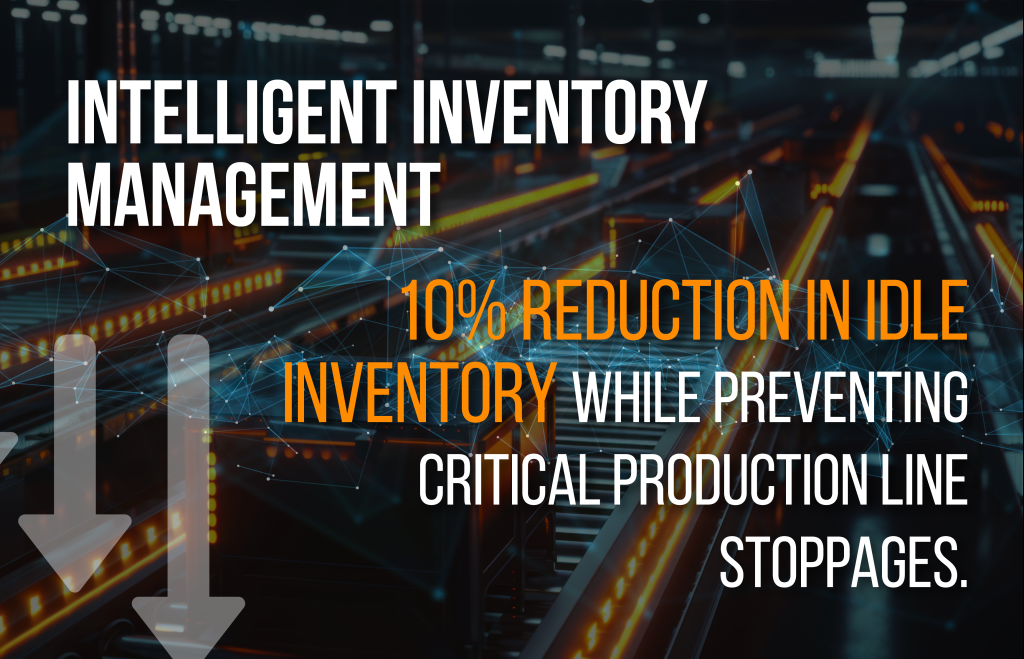
- Intelligent inventory management: by leveraging digital twins in the automotive industry, companies can anticipate parts consumption weeks in advance. This enables a 10% reduction in idle inventory while preventing critical production line stoppages.
These examples highlight a clear reality: when mathematics is applied to decision-making, the benefits cascade across the entire organization—regardless of the product being manufactured or distributed.
The real challenge: the limits of standard systems
It is common to try to manage this operational complexity using spreadsheets or standard ERP modules. However, these tools often collide with a reality that is far more nuanced and unpredictable. While ERPs are designed for transactional management and spreadsheets rely on manual user logic, industrial operations are governed by constraints that these models consistently overlook.
Take transportation logistics as an example. A standard planning tool may design an efficient route, but it rarely accounts for how a specific driver’s overnight rest requirements or regulatory driving limits affect the feasibility of that delivery. Ignoring these factors turns an “optimal” route on paper into an unworkable plan on the road.
The same applies to the physics of cargo. In fuel transportation, it is not enough to assign volumes to a tanker truck; technical compatibility between compartments must be respected to prevent contamination, and loading and unloading sequences must be carefully balanced.
Or consider the energy sector, where optimizing water turbining in a river basin is not just a matter of market prices. It also requires strict compliance with ecological flow requirements and environmental constraints that change in real time.
This is where tailored modeling makes the difference. At Baobab AI, we build mathematical engines that incorporate every specific rule of the business. We don’t force reality to fit the software; we adapt the algorithm so it becomes a true mirror of day-to-day operations. Using an agile methodology, over cycles of 2 to 6 months, we identify critical variables, validate models through what-if analyses, and seamlessly integrate them into companies’ existing systems. Only then can we ensure that a solution is not just mathematically optimal, but also executable and trusted by end users.
Decision Intelligence powered by advanced mathematics and machine learning is a cornerstone of modern industrial efficiency. In a world of tight margins and constant volatility, relying on intuition or outdated systems is an unnecessary risk. Data can be used far more effectively—and combining it within the right Decision AI model is, fundamentally, one of the most powerful ways to compete.
If you’d like to book a free advisory session with one of our Decision Intelligence experts, you can do so directly here:


